Being arrested or charged with DUI can be an intricate situation for anybody in Camp Pendleton South. You may wonder what will happen next, whether you will face jail time, court fines, or license revocation. You might even feel you were not drunk, and thus the DUI charges are not justified. Since it appears intricate, you might believe you cannot afford a DUI lawyer.
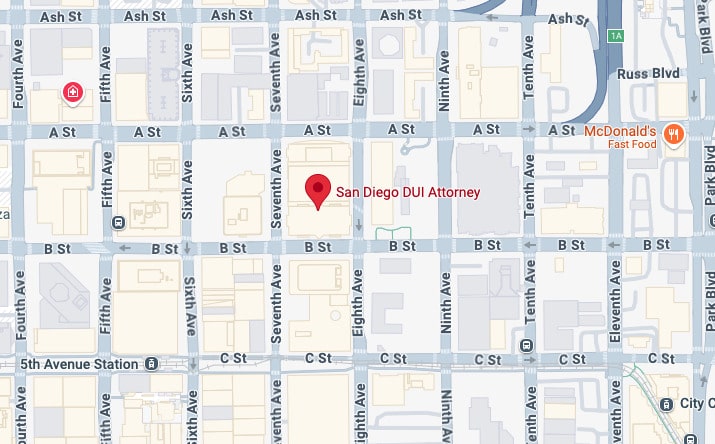
Whatever the situation, we at San Diego DUI Attorney can help you. Our experienced DUI lawyers can help handle your case and relieve you from worry and stress. We are passionate about obtaining for all our clients in Camp Pendleton South the most favorable outcome for their case. We have handled thousands of DUI cases, giving each case the comprehensive attention it deserves. Contact us today for a free consultation.
The Legal Process After a DUI Arrest In Camp Pendleton South
After being arrested for DUI in Camp Pendleton South, the legal process starts with police booking. Booking involves recording your details, photographing you, fingerprinting, and confiscating your personal belongings, among other steps. The arresting officer might also request a breath or blood sample to determine your blood alcohol content or test for controlled substances. This is called DUI chemical testing. Declining to provide these samples can result in severe repercussions, like license suspension.
Also, the arresting officer will confiscate your driver’s license after a DUI arrest. When they seize your license, they will issue you a temporary one, usually a pink slip. This temporary license remains valid for 30 days. It allows you to continue driving while your license is seized.
Note that within ten days of your arrest, you are entitled to demand a DMV administrative hearing to prevent your license from being suspended. If you do not request this hearing, your license will automatically go into suspension after 30 days of the validity of the temporary license.
The DMV hearing is different from the criminal court process. At the DMV hearing, you will only defend against your driver’s license suspension by the DMV hearing officer. On the other hand, during the criminal court process, it will be determined whether or not you committed the crime. At the criminal court, you will face an arraignment, then your case might proceed to pretrial conferences, a plea bargain, or a trial.
Arraignment is the initial court appearance after being charged with DUI. If you are in custody, this hearing should generally happen within forty-eight hours after your arrest. At the arraignment hearing, the presiding judge will formally read you the charges you face. The judge will then ask you to plead not guilty, no contest, or guilty. Should you enter a not-guilty plea, the judge will likely order your release on bail based on your case facts and schedule a court date for the next steps in your case.
Once the arraignment ends, there might be a single or several pretrial conferences. These conferences allow your attorney and the D.A. to discuss the charges and explore potential plea bargains. In some instances, the D.A. might offer a plea deal to lower the penalties or charges themselves in exchange for a plea of guilty.
Your case might proceed to trial if your lawyer and the prosecution do not reach a favorable plea deal during the pretrial conference stage. At this proceeding, the D.A. will submit evidence, including field sobriety test (FST) results, witness testimony, and BAC (blood alcohol content) readings, to demonstrate that you were indeed driving while intoxicated. Your defense lawyer will contest the D.A.’s evidence and might assert the presence of mistakes in the testing procedures or the arrest itself. If the court finds you guilty, the presiding judge will decide on the consequences.
An experienced DUI defense attorney can assist you by identifying valid legal defenses, reviewing the available evidence, and ensuring your legal rights are protected. If necessary, your lawyer can negotiate a favorable plea bargain or fight for you if your case goes to trial to obtain the most favorable outcome.
DUI Elements
If charged with DUI in Camp Pendleton South, the prosecution must prove various legal elements for you to be convicted. DUI charges can stem from driving while intoxicated with drugs, alcohol, or both alcohol and drugs. The key factors making up a crime that the prosecution must prove are as follows:
- Driving an automobile. The first element is the D.A. showing that you were driving a motor vehicle. This does not necessarily mean you must have been driving that vehicle on a highway. You could have been driving on any private or public roadway. Even if your auto was still, the D.A. could show that you fully controlled it and intended to drive it.
- Being intoxicated or under the influence. For the judge to find you guilty of drunk driving, the D.A. must prove you were under the influence of drugs, alcohol, or both. To be under the influence means your capability to operate or have control of the auto was so impaired that you were incapable of driving safely as any sober person would under the circumstances. This is usually established with evidence like FST results, the BAC test results, or observation of your behavior.
- Impairment to safely operate a vehicle. Even if your BAC level is lower than the stipulated limit, the D.A. must still show that the drugs or alcohol had impaired you to the degree that you were unable to drive safely or cautiously. This could include erratic driving conduct, for example, speeding, swerving, or failure to adhere to traffic laws. Police officers might also testify on intoxication signs, like red eyes, alcoholic odor, or slurred speech.
In DUI cases, the prosecution’s duty is to submit sufficient evidence to persuade the jury or judge beyond any shadow of a doubt that you were driving while intoxicated. You might be acquitted of your charges if the prosecuting attorney cannot prove any of the key elements required.
Possible Criminal and Collateral Penalties of DUI in Camp Pendleton South
If convicted of a DUI in Camp Pendleton South, you can be subject to both criminal and collateral penalties, which can substantially impact your life. Criminal consequences can include license suspension, fines, probation, mandatory DUI school programs, or even incarceration.
The precise consequences are often based on the facts of the case; for example, factors like whether it is your first violation or your case had aggravating facts, such as DUI causing injury or having a higher BAC. Here is a general overview of the possible consequences you could be subject to after a conviction:
- Jail time. Being convicted of DUI for the first time can result in a maximum of six months in jail, though many offenders face little to no incarceration period with summary probation. If you are a repeat offender or your case has aggravating circumstances (such as driving with a child in the vehicle, having a BAC level higher than stipulated, or causing injury), the court may impose a longer jail time.
- Driver’s license suspension. Usually, a conviction of DUI will lead to your driver’s license being suspended. If it is your first violation, the license suspension will generally be six months. If you are a repeat offender or your blood alcohol content was exceptionally high, the driver’s suspension will be longer. The court may require you to install an IID (ignition interlock device) in your automobile at your expense.
- Probation. Many DUI offenders face probation rather than jail time. The probation sentence generally lasts for three to five years. When serving your probation sentence, you must adhere to conditions like doing community service, avoiding committing more crimes, and enrolling in DUI school programs.
- Fines. A drunk or drugged-driving conviction generally carries fines as a punishment, which could range between $390 and $1,000 or higher. Additional assessment and court costs can raise the fine further. These court fines are meant to discourage future violations and cover court program costs.
- DUI school program. The court may also require you to enroll in a DUI School program, which lasts from three to eighteen months based on your case facts and whether it is your first, second, or subsequent DUI offense.
Possible Collateral Repercussions of DUI in Camp Pendleton South
Apart from criminal penalties, a conviction of DUI can subject you to collateral consequences. Unlike criminal penalties, collateral repercussions can impact you for the rest of your life. Some of these include the following:
- Impacts on securing employment. A conviction of DUI, especially a felony conviction, can adversely impact your employment prospects. This is especially so if your job entails operating heavy machinery or driving. Some employers might consider a drunk-driving conviction a sign that you have poor judgment or are irresponsible. This may impact hiring or promotion decisions.
- Increased auto insurance rates. Once you have been convicted of DUI, your auto insurance rates will likely increase substantially. Insurance providers see a drunk-driving conviction as a huge risk, and you might be required to possess SR-22 (high-risk insurance) for many years.
- Criminal record. DUI is a crime. Therefore, a conviction will stay on your criminal record, possibly impacting future public perception and legal situations. You can expunge your DUI criminal record in some instances, although you must take further legal action.
- Loss of reputation. If you have a professional reputation to uphold, especially one your business relies on, a conviction of DUI can substantially damage your standing in the community. The conviction can also destroy personal and familial relationships.
The penalties of a drunk-driving conviction can be severe and long-lasting. If you are facing drunk-driving charges, a lawyer can help you understand the collateral impacts and legal consequences that might follow.
DUI Defenses You Can Use
You and your lawyer can use different legal defenses to contest DUI charges. These defenses try to prove that the prosecuting attorney cannot establish the elements making up the offense beyond a shadow of a doubt. The following are the prevalent defenses to DUI charges:
Unlawful Traffic Stop
Your lawyer can argue that the arresting officer lacked a valid basis to pull over your vehicle. For a drunk or drugged driving incident to be lawful, police officers must possess a reasonable suspicion that a motorist is breaking the law, like speeding or swerving. If the police officer pulled you over without a legitimate cause or reason, the judge might rule that all the evidence collected after that stop is not admissible. This could lead to a complete case dismissal.
Rising BAC Level
This defense asserts that your BAC was lower than the stipulated lawful limit when you were behind the wheel, but rose past the limit after you were arrested. Alcohol takes some time to be absorbed into the blood. Therefore, if you were arrested briefly after drinking, your BAC might increase while you were detained, although you were not impaired when driving.
Medications or Medical Conditions
Certain medications or medical conditions can generate symptoms that anyone might mistake for signs of being intoxicated. Conditions like acid reflux or diabetes, for example, can lead to a breathalyzer device producing incorrect results. Some over-the-counter or prescription medications could also impact eye movement, speech, or coordination, which the prosecution can misinterpret as impairment signs.
Improper or Inaccurate Testing
Among the most prevalent defenses of DUI is that the results of the chemical testing you underwent (urine, blood, or breath) to determine the BAC level were improperly administered or inaccurate. For example, if the breathalyzer device was improperly maintained or calibrated, it might generate false results. Also, if the police officer never followed the right procedures when performing the tests, your lawyer may contest the outcome. Blood test results could also be false because of improper handling or contamination.
Police Officer Lacked Probable Cause to Arrest You
Even when a police officer stops you lawfully, they must possess probable cause to place you under arrest for driving under the influence. That means they must have enough reasons to justify the arrest, like showing intoxication signs or failing FSTs. If the police officer did not have sufficient evidence to believe you were intoxicated when you were arrested, the judge might dismiss your case.
How a DUI Defense Lawyer Can Help You
An experienced DUI defense lawyer can be key in assisting you in handling the challenging legal process following a drunk-driving arrest. From negotiating with the prosecutor to contesting their evidence, a skilled lawyer can substantially improve your chances of a positive outcome for your case. Here is how an attorney can help you:
Exploring DUI Legal Defenses
An experienced DUI attorney can identify and present legal defenses personalized to your case. The defenses can be those mentioned above, or any other that apply to your case. Your lawyer can also argue alternative explanations for your conduct that might not entail impairment.
Investigating the Circumstances Surrounding the Arrest
A DUI attorney will also probe the circumstances of your criminal arrest to establish whether police complied with the correct legal procedures. Your lawyer can bring a motion to suppress the collected evidence if the arresting officer lacked a legitimate reason to pull you over or probable cause to place you under arrest. If this motion succeeds, the judge may have no option but to dismiss your case.
Negotiating Plea Bargains
If the prosecution’s evidence is compelling, your lawyer can negotiate with the D.A. to lower penalties or charges. They might reach a plea bargain that leads to reduced charges, a more lenient incarceration period, like probation rather than jail, and reduced fines.
Contesting the Evidence
Reviewing the prosecution’s evidence against you is among the key duties of a lawyer. The D.A.’s case mostly hinges on chemical testing results (such as blood or breathalyzer tests), officer observations, and FSTs. An experienced lawyer will review whether the test administrator performed chemical tests and FSTs correctly and the arresting officer adhered to the right procedures.
They may, for example, contest the correctness of a breath test if the breathalyzer device was not maintained or calibrated properly or if the test administrator administered it incorrectly. They might also challenge the blood test results if the correct procedures were not followed, like improper storage or contamination during sample collection.
Representing You Before the Court
Should your case go to trial, an experienced lawyer can represent you during this period. They will argue your defense strategy, contest the D.A.’s evidence, and cross-examine witnesses. Their court experience can assist in ensuring your legal rights are safeguarded.
Find a Skilled Camp Pendleton South DUI Attorney Near Me
A defense lawyer can be helpful if you face a DUI charge in Camp Pendleton South. They will determine the various defense strategies that apply to your case and strive to obtain the most favorable outcome. However, California DUI law is intricate and necessitates that the DUI defense lawyer you hire have the experience and expertise to contest the evidence. At San Diego DUI Attorney, we can help you. We have years of experience in DUI cases and always strive to protect our clients’ rights and best interests. Contact us at 619-535-7150 to schedule a free, no-obligation consultation.